Condicionales en inglés: Zero, First, Second y Third Conditional
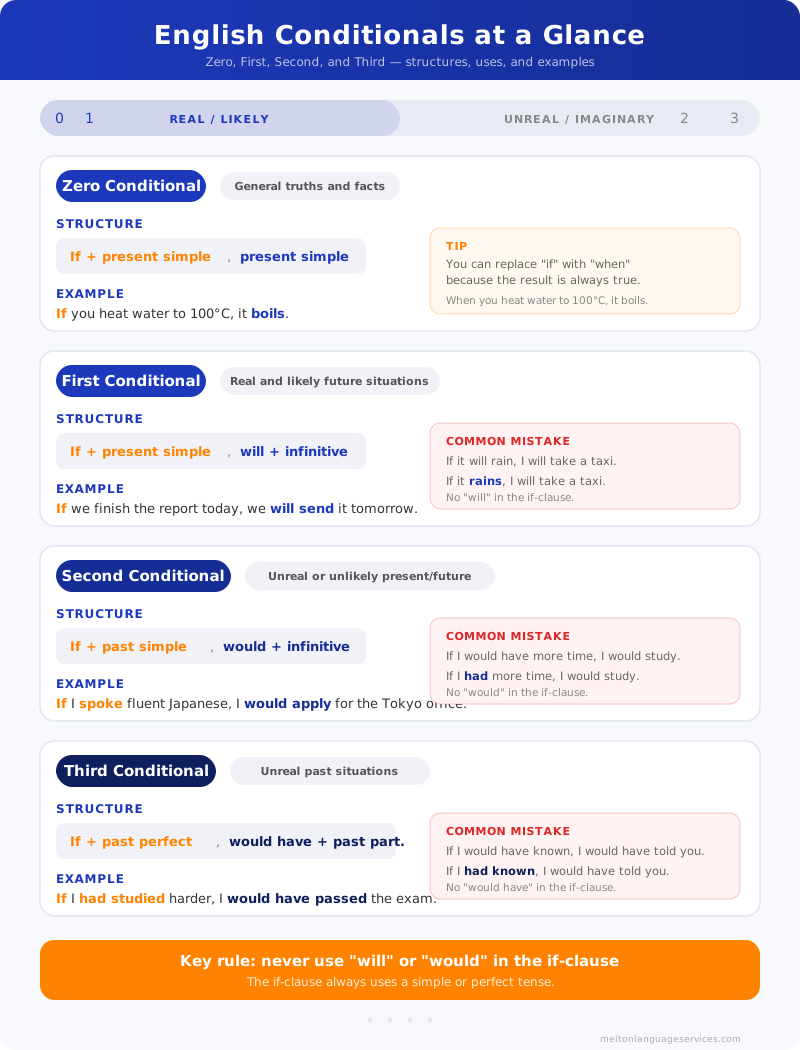
Los condicionales son una de las estructuras más útiles del inglés, y también una de las que más confusión generan. Si alguna vez has dudado entre “if I have” e “if I had,” o no tenías claro cuándo usar “would” en vez de “will,” esta guía es para ti.
Hay cuatro condicionales principales en inglés. Cada uno describe una relación diferente entre una condición y su resultado. Vamos a verlos uno por uno.
Zero conditional: Verdades generales y hechos
El zero conditional describe cosas que siempre son ciertas. Si se cumple la condición, el resultado siempre ocurre. No hay incertidumbre.
Estructura
If + present simple, present simple
Ejemplos
- “If you heat water to 100°C, it boils.”
- “If employees feel valued, they perform better.”
- “If the client does not receive the invoice by Friday, the payment is late.”
Cuándo usarlo
Usa el zero conditional para hechos científicos, reglas generales y cosas que siempre son ciertas en tu experiencia. Es muy habitual en contextos profesionales para describir políticas y procedimientos:
- “If a candidate scores below B2, we do not proceed to the second interview.”
- “If the system detects an error, it sends an automatic notification.”
Punto clave
En el zero conditional puedes sustituir “if” por “when” sin cambiar el significado, porque el resultado siempre es verdad: “When you heat water to 100°C, it boils.”
First conditional: Situaciones futuras reales y probables
El first conditional describe situaciones posibles y probables. El hablante ve la condición como algo realista.
Estructura
If + present simple, will + infinitive
Ejemplos
- “If we finish the report today, we will send it to the client tomorrow.”
- “If it rains, I will take a taxi to the meeting.”
- “If you practise every day, you will see results within a month.”
Cuándo usarlo
Usa el first conditional para planes, predicciones, promesas y advertencias sobre el futuro:
- “If you do not confirm by Monday, we will offer the place to another candidate.”
- “If the budget is approved, we will start the project in Q2.”
- “If you need anything, I will be in my office until six.”
Variaciones habituales
No siempre necesitas “will” en la cláusula de resultado. Otros verbos modales también funcionan:
- “If you finish early, you can leave.” (permiso)
- “If the client calls, you should take the message.” (consejo)
- “If there is a problem, you must notify the manager.” (obligación)
Error frecuente
No uses “will” en la cláusula con if. “If it will rain, I will take a taxi” es incorrecto. La forma correcta es: “If it rains, I will take a taxi.”
Second conditional: Situaciones irreales o improbables del presente/futuro
El second conditional describe situaciones imaginarias, improbables o contrarias a la realidad actual. El hablante ve la condición como hipotética.
Estructura
If + past simple, would + infinitive
Ejemplos
- “If I spoke fluent Japanese, I would apply for the Tokyo office.”
- “If we had a bigger budget, we would hire two more developers.”
- “If I were you, I would accept the offer.”
Cuándo usarlo
Usa el second conditional para escenarios hipotéticos, dar consejos e imaginar situaciones que no son reales en este momento:
- “If we offered remote work, we would attract more candidates.” (Pero no lo ofrecemos.)
- “If I had more time, I would learn another language.” (Pero no tengo más tiempo.)
- “If the company invested in training, productivity would improve.” (Pero no invierte.)
¿“Was” o “were”?
En inglés formal, se usa “were” para todos los sujetos en el second conditional: “If I were the manager…” / “If she were here…” En el habla cotidiana, “was” es común con I/he/she/it (“If I was the manager…”), pero “were” siempre es correcto y suena más profesional.
Error frecuente
No uses “would” en la cláusula con if. “If I would have more time, I would study” es incorrecto. La forma correcta es: “If I had more time, I would study.”
Third conditional: Situaciones irreales del pasado
El third conditional describe situaciones que no ocurrieron en el pasado. Se usa para imaginar un pasado diferente y su resultado imaginario. No se puede cambiar nada, ya es demasiado tarde.
Estructura
If + past perfect, would have + past participle
Ejemplos
- “If I had studied harder, I would have passed the exam.”
- “If we had known about the delay, we would have informed the client.”
- “If she had accepted the job, she would have moved to Berlin.”
Cuándo usarlo
Usa el third conditional para expresar arrepentimiento, oportunidades perdidas y analizar qué salió mal:
- “If we had started the project earlier, we would have met the deadline.”
- “If I had prepared better, the presentation would have gone more smoothly.”
- “If they had checked the contract, they would have noticed the error.”
Variaciones habituales
- “If I had known, I could have helped.” (capacidad pasada)
- “If we had asked, they might have agreed.” (posibilidad pasada)
Error frecuente
No uses “would have” en la cláusula con if. “If I would have known, I would have told you” es incorrecto. La forma correcta es: “If I had known, I would have told you.”
Comparación rápida
Así se ve el mismo tema en los cuatro condicionales:
| Condicional | Ejemplo | Significado |
|---|---|---|
| Zero | ”If I drink coffee after 6pm, I cannot sleep.” | Esto siempre pasa. |
| First | ”If I drink coffee after 6pm, I will not sleep tonight.” | Es probable que pase hoy. |
| Second | ”If I drank coffee after 6pm, I would not sleep.” | Estoy imaginando la situación (no pienso hacerlo). |
| Third | ”If I had drunk coffee after 6pm, I would not have slept.” | No bebí café, así que dormí bien. |
Mixed conditionals (condicionales mixtos)
A veces necesitas mezclar el second y el third conditional. Esto ocurre cuando un evento pasado tiene un resultado presente, o un estado presente tuvo una consecuencia pasada.
Causa pasada, resultado presente
If + past perfect, would + infinitive
- “If I had accepted that job in 2020, I would be living in London now.”
- “If we had invested in language training earlier, the team would be more confident today.”
Estado presente, consecuencia pasada
If + past simple, would have + past participle
- “If I were more patient, I would have handled that meeting better.”
- “If she spoke French, she would have got the contract.”
Consejos para dominar los condicionales
- Identifica primero el tiempo y la realidad. Antes de elegir un condicional, pregúntate: ¿es real o imaginario? ¿Presente/futuro o pasado?
- No pongas “would” ni “will” en la cláusula con if. Este es el error más frecuente. La cláusula con if lleva un tiempo simple o perfecto, nunca “will” o “would.”
- Usa contracciones al hablar. “I’d” (I would/I had), “we’ll” (we will), “they’d have” (they would have). Los condicionales son estructuras largas y los hablantes nativos casi siempre las contraen.
- Practica con decisiones reales. Piensa en tu trabajo: “If I had prepared differently for that presentation…” o “If we change the deadline, we will need to…” El contexto real hace que la gramática se fije.
Una nota sobre “unless”
“Unless” significa “if not” y es muy común en el inglés profesional:
- “Unless you confirm by Friday, we will cancel the booking.” (= If you do not confirm…)
- “Unless there is a problem, the delivery will arrive on Monday.” (= If there is not a problem…)
“Unless” solo funciona con el first y el zero conditional. No lo uses con el second ni el third conditional.
Los condicionales son estructuras que usarás todos los días en inglés profesional — en correos electrónicos, reuniones, negociaciones e informes. La clave no es memorizar reglas, sino practicar usándolos en contexto hasta que resulten naturales.