Alternativas a 'increase' y 'decrease' en informes
Actualizado: 21 de septiembre de 2026
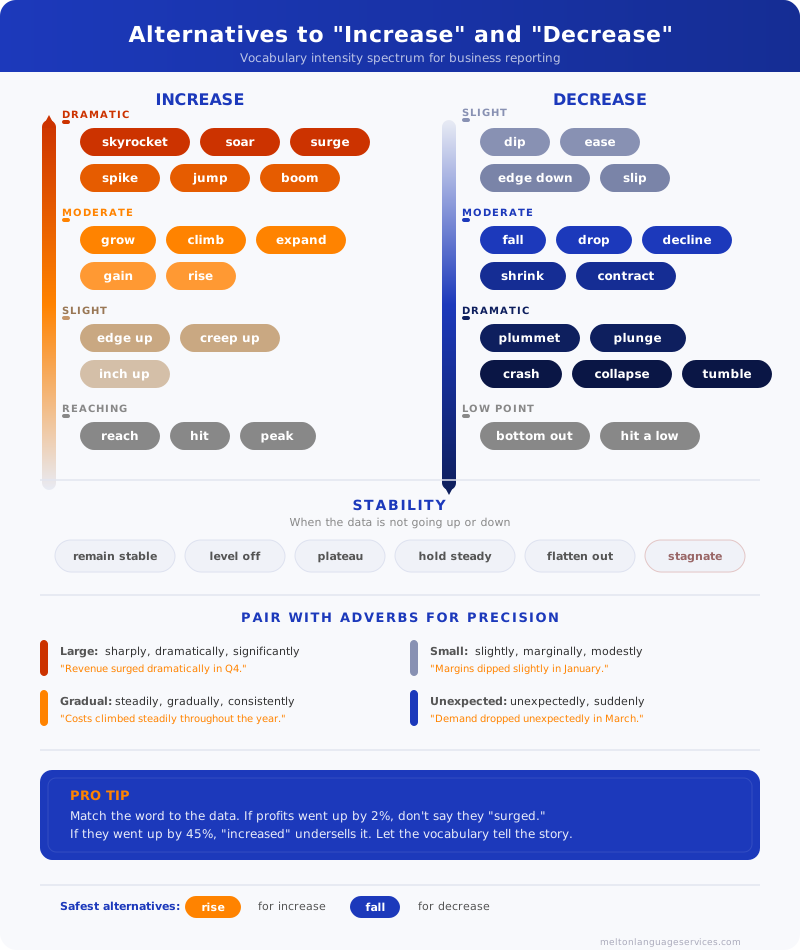
Abre cualquier informe trimestral y encontrarás el mismo patrón: revenue increased, costs decreased, headcount increased, churn decreased. Las palabras son correctas, pero después del tercer párrafo, empiezan a confundirse. Tu lector deja de prestar atención porque el lenguaje no ofrece textura ni da idea de si ese aumento fue un avance gradual o un salto espectacular.
El inglés profesional tiene docenas de alternativas para estas dos palabras, cada una con un matiz diferente. Elegir la adecuada hace tu escritura más precisa y atractiva. Aquí tienes una guía práctica, organizada por intensidad y contexto.
Alternativas a “increase”
Subidas leves o graduales
- Rise: “Profits rose by 3% in Q2.” (neutral, funciona en cualquier contexto)
- Edge up: “Margins edged up slightly.” (muy pequeña, gradual)
- Creep up: “Costs have been creeping up over the past six months.” (lenta, posiblemente inadvertida)
- Inch up: “Share prices inched up this week.” (movimiento mínimo)
Subidas moderadas
- Grow: “Revenue grew steadily throughout the year.” (connotación positiva)
- Climb: “Customer numbers climbed to 50,000.” (movimiento ascendente constante)
- Expand: “The team expanded by 20%.” (se usa frecuentemente para tamaño, capacidad y alcance)
- Gain: “The stock gained 4% on Tuesday.” (habitual en finanzas)
Subidas bruscas o dramáticas
- Surge: “Demand surged after the product launch.” (súbita, dramática)
- Soar: “Exports soared to record levels.” (aumento muy grande)
- Spike: “There was a spike in web traffic.” (súbito, posiblemente temporal)
- Jump: “Sales jumped 25% in December.” (súbito, significativo)
- Skyrocket: “Energy prices skyrocketed.” (extremo, a menudo en contexto negativo)
- Boom: “The market is booming.” (crecimiento sostenido y dramático)
Alcanzar un nivel
- Reach: “Revenue reached 10 million euros.”
- Hit: “We hit our target ahead of schedule.” (informal pero común en negocios)
- Peak: “Demand peaked in July.” (implica que bajó después)
Alternativas a “decrease”
Bajadas leves o graduales
- Dip: “Sales dipped slightly in January.” (pequeña, posiblemente temporal)
- Ease: “Inflation eased to 2.1%.” (connotación positiva: la bajada es bienvenida)
- Edge down: “Interest rates edged down.” (mínima)
- Slip: “Market share slipped by half a percent.” (pequeña, posiblemente preocupante)
Bajadas moderadas
- Fall: “Exports fell by 8%.” (neutral, muy usada)
- Drop: “Revenue dropped in the third quarter.” (bastante brusca)
- Decline: “Customer satisfaction declined steadily.” (gradual, formal)
- Shrink: “The market shrank by 12%.” (reducción de tamaño)
- Contract: “The economy contracted for the second consecutive quarter.” (formal, contexto económico)
Bajadas bruscas o dramáticas
- Plummet: “Share prices plummeted overnight.” (dramática, negativa)
- Plunge: “Profits plunged 40%.” (caída dramática)
- Crash: “The market crashed.” (súbita, severa)
- Collapse: “Demand collapsed after the regulation change.” (total o casi total)
- Tumble: “The currency tumbled against the dollar.” (rápida, significativa)
Alcanzar un punto bajo
- Bottom out: “We believe sales have bottomed out.” (alcanzar el punto más bajo, puede recuperarse)
- Hit a low: “Customer numbers hit a five-year low.”
Describir estabilidad
A veces los datos no suben ni bajan:
- Remain stable / steady: “Prices remained stable throughout Q4.”
- Level off / level out: “Growth levelled off after two years of expansion.”
- Plateau: “Revenue has plateaued at around 5 million.”
- Hold steady: “Employment held steady despite the downturn.”
- Flatten out: “The curve flattened out in the second half of the year.”
- Stagnate: “Wages have stagnated.” (connotación negativa: la estabilidad no es bienvenida)
Adverbios que añaden precisión
Combina tu verbo con un adverbio para ser más específico:
- Sharply / dramatically / significantly: cambio grande
- Steadily / gradually / consistently: cambio lento y continuo
- Slightly / marginally / modestly: cambio pequeño
- Unexpectedly / suddenly: cambio no previsto
- Briefly / temporarily: cambio que no duró
Ejemplo: “Revenue grew steadily throughout 2024 before dipping slightly in January.”
Combinar verbos con referencias temporales
El verbo adecuado se vuelve aún más efectivo cuando se combina con un marco temporal claro. Aquí tienes algunos patrones que funcionan bien en informes y presentaciones:
- “Revenue surged in Q3 before levelling off towards the end of the year.”
- “Customer acquisition climbed steadily over the first six months, then plateaued in July.”
- “After dipping briefly following the restructure, employee satisfaction recovered within two quarters.”
Observa cómo combinar dos verbos de movimiento en una misma frase cuenta una historia más rica que decir “it went up and then stayed the same.” Este tipo de variedad a nivel de frase es lo que separa un inglés empresarial competente de una escritura profesional y pulida.
Formas de adjetivo y sustantivo que acompañan a estos verbos
Convierte un verbo en sustantivo y acompáñalo del adjetivo adecuado, y ganarás otro nivel de control. En lugar de “sales rose sharply”, puedes escribir “a sharp rise in sales” o “a steep gain in sales”. La forma sustantiva te permite colocar el cambio al principio de la frase, usarlo como sujeto de una oración o añadir un adjetivo valorativo que le indique al lector cómo interpretar el movimiento.
Sustantivos habituales y adjetivos que combinan de forma natural con ellos:
- Rise, gain, uptick, uplift para movimiento ascendente. Adjetivos que encajan: sharp, steady, modest, marginal, unexpected, welcome, sustained, encouraging.
- Decline, drop, dip, downturn, contraction para movimiento descendente. Adjetivos: gradual, steady, sharp, sudden, prolonged, worrying, seasonal, temporary.
- Reversal, turnaround, recovery, rebound para movimiento que cambia de dirección. Adjetivos: sharp, sudden, partial, full, temporary, hard-won.
- Slowdown, slump, plateau, stagnation para movimiento que se estanca o se ralentiza. Adjetivos: prolonged, brief, unexplained, worrying, welcome.
Ejemplo: “The quarter delivered a steady rise in enrolments, a marginal decline in cancellations, and a welcome rebound in renewals.”
Esa única frase cubre tres métricas con tres formas distintas de cambio. Una versión construida sobre “increased” y “decreased” necesitaría el doble de palabras para decir la mitad. Aprender las formas sustantivas duplica la forma en la que puedes estructurar una frase, algo útil cuando un párrafo empieza a resultar repetitivo.
Cómo hablan del cambio los distintos sectores
El espectro de verbos es en general el mismo entre funciones empresariales, pero cada sector se apoya en su propio vocabulario preferido. Si escribes para estos equipos o trabajas con ellos, ajustarte a su lenguaje hace que tus informes se sientan nativos en lugar de traducidos.
Finanzas: gain, lose, rally, recover, rebound, correct, pare back, offset, trade higher, close down. El movimiento suele enmarcarse contra un índice o el cierre anterior, y los verbos a menudo implican dirección respecto a las expectativas más que un cambio absoluto.
Marketing: lift, uplift, drive, convert, engage, drop off, churn, bounce. El cambio se enmarca en torno a una campaña, un canal o una etapa del embudo, y los verbos suelen llevar implícita una causa.
Operaciones y cadena de suministro: ramp up, scale, roll out, wind down, throttle, throughput, backlog, work down. El lenguaje se apoya en la capacidad y el flujo más que en las cifras absolutas. Un equipo “ramps up production”, “throttles a queue” o “works down a backlog”.
Recursos humanos y equipos de personas: retain, backfill, expand headcount, reduce headcount, right-size, redeploy, attrit. El cambio se enmarca en torno a la cobertura de puestos y al número de personas, y los verbos a menudo señalan a la vez un movimiento y una decisión de gestión.
Los mismos datos subyacentes, cuatro vocabularios distintos. Cuando presentas ante una audiencia mixta, la opción más segura es el núcleo neutro (rise, fall, grow, decline) añadiendo términos sectoriales donde la audiencia los reconocerá. Cuando presentas ante una audiencia de una sola función, los verbos del sector transmiten que entiendes su trabajo.
Registro: cuándo “surged” suena mal
El periodismo financiero está lleno de verbos dramáticos porque el trabajo de un titular es hacerte hacer clic. Los informes internos tienen el trabajo contrario. Una presentación al consejo que diga que los ingresos “skyrocketed” y los costes “plummeted” se lee como sobrecalentada, y el lector empieza a desconfiar del análisis. Verbos grandes con cifras pequeñas hacen el mismo daño a tu credibilidad que verbos pequeños con cifras grandes.
Un test práctico: si la cifra no aguantaría el mismo peso en un titular de Bloomberg, no uses un verbo de Bloomberg.
- Ingresos suben un 2%: rose, edged up, ticked up. No surged.
- Costes bajan un 4%: fell, eased, came down. No plummeted.
- Churn sube un 30% en un solo mes: jumped, spiked. Surged es defendible aquí.
- Plantilla baja en tres personas en un equipo de cuarenta: dipped, edged down. No collapsed.
Los informes formales y las presentaciones al consejo también se apoyan en verbos de raíz latina (decline, contract, expand, moderate, accelerate) más que en verbos de raíz germánica (drop, shrink, grow, ease, speed up). Los verbos germánicos son más cortos y claros, pero se sitúan un poco más abajo en la escala de registro. Reserva los verbos latinos para la escritura que quieres que se sienta mesurada, y usa los germánicos cuando quieras que el lector avance rápido por el párrafo. Alternar ambos a lo largo de un documento mantiene el tono variado sin cruzar en ningún momento hacia ninguno de los dos extremos.
Consejos prácticos para informes y presentaciones
-
Varía tu vocabulario. Usa dos o tres palabras diferentes para subidas y bajadas dentro de un mismo informe. Mantiene la atención del lector.
-
Ajusta la palabra a los datos. Si los beneficios subieron un 2%, no digas que “surged”. Si subieron un 45%, “increased” se queda corto.
-
Usa verbos, no sintagmas nominales. “There was an increase in sales” es más débil que “Sales increased”. Los verbos activos son más directos y más fáciles de seguir.
-
Lee periodismo financiero. El Financial Times, Bloomberg y The Economist usan este vocabulario constantemente. Leerlos regularmente hará que estas palabras te resulten naturales.
Puntos clave
- “Increase” y “decrease” están bien, pero la variedad hace tu inglés más profesional y preciso
- Elige palabras que coincidan con la intensidad del cambio que describes
- Los adverbios añaden precisión sin añadir complejidad
- Practica leyendo noticias financieras y anotando el vocabulario que se usa
- En caso de duda, “rise” y “fall” son tus alternativas más seguras
La diferencia entre un buen inglés empresarial y uno excelente a menudo se reduce al rango de vocabulario. Estas palabras son tu kit de herramientas para contar la historia que hay detrás de los números.
Preguntas frecuentes
¿Qué otra palabra puedo usar en lugar de “increase” en inglés empresarial?
La alternativa correcta depende del tamaño y la velocidad del cambio. Para movimientos pequeños, usa “edge up”, “tick up” o “inch up”. Para subidas moderadas, prueba “rise”, “climb”, “grow” o “expand”. Para saltos grandes o rápidos, usa “surge”, “soar”, “jump” o “spike”. Ajustar el verbo a la magnitud del cambio es lo que hace que la escritura empresarial se sienta precisa en lugar de rellena.
¿Cómo describo un cambio pequeño en los datos sin decir “increased”?
Recurre a verbos que indican movimiento limitado: “edge up”, “tick up”, “inch up”, “creep up” o “nudge higher”. Para bajadas a la misma escala funcionan bien “edge down”, “dip”, “ease” o “soften”. Añadir adverbios como “slightly”, “marginally” o “modestly” refuerza la escala pequeña. La combinación de verbo y adverbio le dice al lector cuánto se movió la métrica sin obligarle a leer la cifra.
¿Cuál es la diferencia entre “rise” y “soar”?
“Rise” describe una subida moderada y neutra. Es el verbo seguro por defecto para cualquier movimiento ascendente. “Soar” describe una subida rápida y grande, y aporta un tono más dramático. Usa “rise” para crecimiento sostenido en un informe trimestral. Usa “soar” cuando la cifra haya superado claramente las expectativas o cuando quieras llamar la atención sobre el tamaño del cambio. Ajustar el tono a la magnitud es lo que hace que la escritura de datos se sienta pulida.