Measuring ROI on Corporate Language Training
Most companies that invest in language training never measure whether it worked. They approve the budget, run the programme, and move on. If anyone asks about results, they point to attendance figures or a satisfaction survey. That is not ROI. That is activity tracking.
If you are spending money on language training for your team, you should know what you are getting for it. Not in vague terms, but in concrete, measurable outcomes that connect to your business.
Why most companies never measure language training ROI
The short answer: nobody told them how. Language training has traditionally sat in a grey area between professional development and employee benefit. It gets budgeted like a perk and evaluated like one too. Did people attend? Did they enjoy it? Great, renew the contract.
The longer answer is that measuring language ability in a workplace context is harder than measuring, say, software adoption or sales training outcomes. Language is not binary. You cannot check a box that says “speaks English now.” So most companies default to the easiest metrics available, which happen to be the least useful ones.
What ROI actually means in this context
ROI on language training is not about calculating a precise financial return down to the cent. It is about answering a practical question: is your team more capable of doing their work in the target language than they were before training started?
That capability shows up in specific ways. Fewer emails that need to be rewritten. Meetings where your team contributes instead of staying silent. Reports that go out without a colleague having to check every sentence. A new market your team can now serve directly instead of through intermediaries.
The wrong metrics: attendance and satisfaction surveys
Attendance tells you who showed up. It tells you nothing about whether they learned anything useful. A team member can attend every session for a year and still struggle to handle a client call in English.
Satisfaction surveys measure how people felt about the experience. That matters for engagement, but a high satisfaction score does not mean the training delivered business value. People can enjoy a course that teaches them nothing they actually need.
Hours completed is another common one. It is purely an input metric. You would not measure the ROI of a marketing campaign by how many hours your team spent on it.
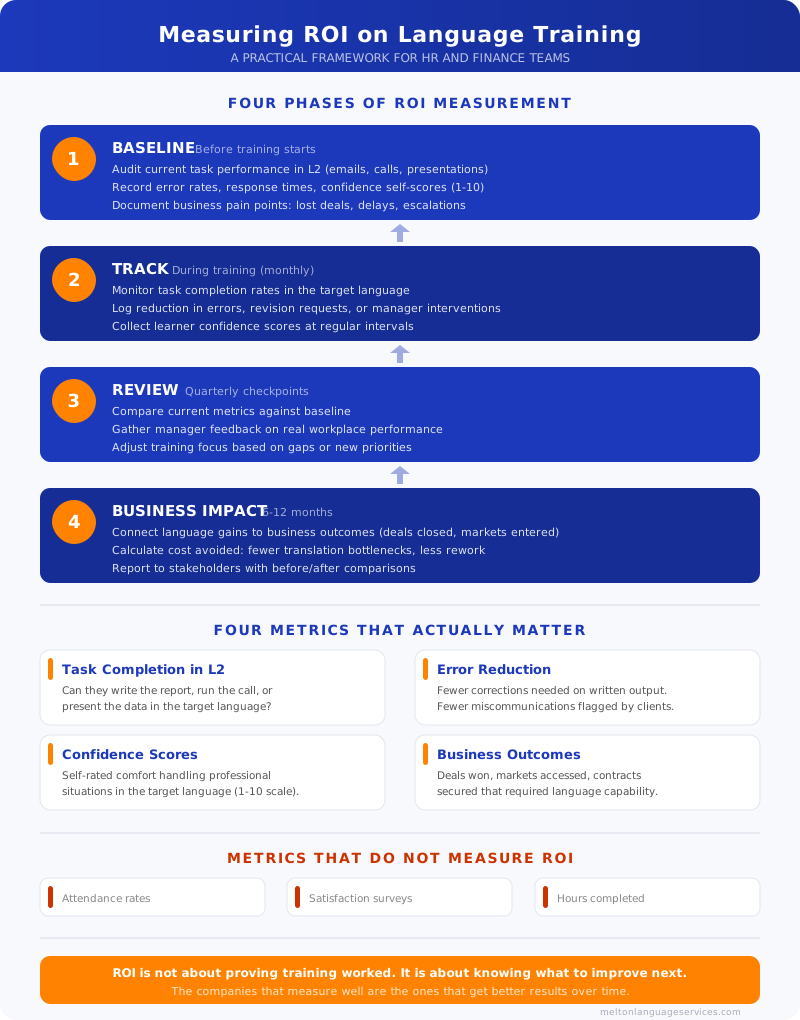
Four metrics that matter
If you want to know whether language training is delivering value, track these:
Task completion in L2. Can your team members now do specific work tasks in the target language that they could not do before? Writing a proposal. Leading a meeting. Handling a technical support call. These are observable, testable outcomes.
Error reduction. Are there fewer corrections needed on written communication? Fewer misunderstandings reported by clients or partners? This is concrete and trackable if you establish a baseline.
Confidence scores. Ask your team to rate their comfort level handling professional situations in the target language on a simple 1-10 scale. Do this before training starts and at regular intervals. Self-reported confidence correlates strongly with willingness to use the language at work.
Business outcomes. This is the hardest to measure but the most compelling. Did your team close a deal in a new market? Reduce dependency on external translators? Handle a client relationship directly that previously required a bilingual intermediary? These outcomes tie training directly to business results.
Setting baselines before training starts
You cannot measure improvement without a starting point. Before any training begins, document where your team stands. Have managers identify the specific language tasks their teams struggle with. Record how those tasks are currently handled. Note workarounds: the colleague who translates every email, the manager who sits in on every international call.
This baseline does not need to be elaborate. A short audit of current capabilities and pain points gives you everything you need to measure against later.
How to structure quarterly progress reviews
Every three months, revisit your baseline metrics. Have your team re-rate their confidence scores. Ask managers whether they have noticed changes in how their teams handle language-dependent tasks. Review any available data on error rates or task completion.
The quarterly review is also where you adjust. If a team is progressing well on written communication but still struggling with live meetings, the training focus should shift. Good measurement is not just about proving value. It is about directing the training where it will have the most impact.
When ROI takes longer than expected
Language development is not linear. Your team might show rapid improvement in the first few months as they learn sector-specific vocabulary, then plateau as they work on more complex skills like negotiation or nuanced written communication.
This is normal. If your metrics show that task completion and confidence are improving but the pace has slowed, that is not a sign the training has stopped working. It is a sign your team is tackling harder skills. The quarterly review structure helps you distinguish between a genuine stall and a natural phase of development.
Set expectations early. Meaningful ROI on language training typically becomes clear within six to twelve months, not six weeks.
A simple framework you can use
Start with these four steps:
- Baseline. Before training, audit your team’s current language capabilities against their actual job requirements. Document pain points and workarounds.
- Track. Monthly, monitor task completion in the target language, error rates, and confidence scores.
- Review. Quarterly, compare against baseline. Gather manager feedback. Adjust training priorities.
- Report. At six and twelve months, connect language gains to business outcomes. Present before-and-after comparisons to stakeholders.
This does not require expensive tools or complex systems. A shared spreadsheet and a structured conversation with managers every quarter will get you most of the way there.
The companies that measure their language training are the ones that get better results from it. Not because measurement is magic, but because it forces everyone involved to focus on outcomes that actually matter to the business.