Restaurant English for Business Dinners and Socialising
Updated: 1 June 2026
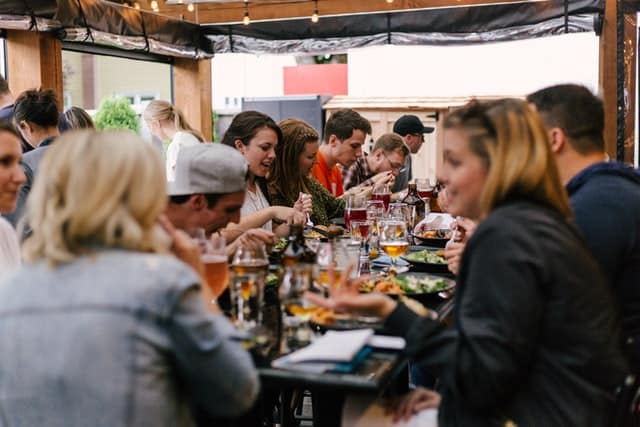
Your grammar might be perfect in a boardroom, but put you in a restaurant with a client and suddenly everything feels different. The waiter is speaking quickly, your host says “shall we go Dutch?” and you have no idea whether to order first or wait. Some of the most important business conversations happen over dinner, and the language you need is very different from what you use in meetings.
For many professionals, this informal context is genuinely harder than a formal presentation. In a meeting, you have an agenda and prepared material. At a restaurant, you need to handle small talk, colloquial language, cultural etiquette, and the unpredictable flow of casual conversation, all while trying to order your food.
Arriving and being seated
When you arrive at a restaurant for a business dinner, the first few moments set the tone:
- “Hi, we have a reservation under [name].”
- “A table for four, please.”
- “Could we sit somewhere quieter? We have some things to discuss.”
If you are hosting, take the lead. Suggest where to sit, hand over menus, and make your guest feel comfortable. In English-speaking business culture, the host typically manages the logistics.
Ordering
Asking about the menu
- “What would you recommend?”
- “What is the [dish] like?” (asking about a specific item)
- “Is the sea bass fresh today?”
- “Could I have the steak, medium rare, please?”
- “I will go with the risotto.” (“go with” is very natural here)
Dietary requirements
This comes up constantly in international business:
- “I am vegetarian / vegan / pescatarian.”
- “Do you have any gluten-free options?”
- “I have a nut allergy, so could you check with the kitchen?”
- “Is there anything dairy-free on the menu?”
Drinks
- “Shall we get a bottle of wine for the table?”
- “I will have a glass of the house red, please.”
- “Just sparkling water for me, thanks.”
- “Could we see the wine list?”
Small talk during dinner
The informal conversation at a business dinner is where relationships are really built. Here are some natural topics and phrases:
Safe topics
- Travel: “Have you been to Madrid before? / What do you think of the city?”
- Food: “Do you have anything like this where you are from?”
- Weekend plans: “Are you doing anything this weekend?”
- General interests: “Do you follow any sports? / Have you seen anything good on TV lately?”
Topics to approach with care
- Politics and religion: generally best avoided unless the other person brings them up
- Salary and money: considered impolite in most English-speaking cultures
- Personal health: keep it light
Useful phrases for keeping conversation going
- “That is really interesting. How did you get into that?”
- “I have always wanted to try that.”
- “Funny you should say that, because…”
- “I know what you mean.”
Handling the bill
This can be the most awkward part of a business dinner. Here are the key phrases:
- “This is on me.” / “Let me get this.” (you are paying)
- “Shall we split it?” (suggesting equal payment)
- “Could we have the bill, please?” (British English) / “Could we get the check?” (American English)
- “Could we pay separately?” (less common at business dinners, but useful)
Tipping
Tipping culture varies hugely:
- UK: 10-12.5% is standard. Many restaurants add a service charge automatically. You can ask: “Is service included?”
- US: 18-20% is expected. Not tipping is considered very rude.
- Spain: Tipping is appreciated but not expected. Rounding up or leaving a few euros is standard.
- Northern Europe: Often included in the price.
If you are unsure, ask: “What is the usual tipping practice here?” Nobody will judge you for asking.
Colloquial expressions you will hear
Business dinners are more casual than meetings, so expect informal language:
- “Dig in!”: Start eating
- “I am stuffed.”: I am very full
- “This is to die for.”: This is incredibly good
- “Let us call it a night.”: Let us finish and leave
- “My treat.”: I am paying
- “Shall we grab a coffee?”: Suggests a more casual meeting or continuing the conversation
- “I could eat a horse.”: I am extremely hungry
Navigating cultural differences at the table
International business dinners bring together different dining cultures, and being aware of the differences helps you avoid awkward moments:
- Pace of eating: In the UK and US, business dinners tend to move faster than in Spain or France, where meals are a longer, more relaxed affair. Follow the host’s pace.
- When to talk business: In the US and UK, it is common to discuss business during the meal. In many European countries, business topics often wait until dessert or coffee. If you are unsure, let your host take the lead.
- Alcohol: Some colleagues will not drink for personal or religious reasons. Never pressure anyone. If you are hosting, always offer non-alcoholic options without making it a point of discussion.
- “Go Dutch” vs hosting: “Going Dutch” means everyone pays for themselves. In English-speaking business culture, the person who invited typically pays. If someone says “this is on me,” accept graciously. You can reciprocate next time.
When in doubt, observe and mirror your host. Being attentive to these dynamics shows cross-cultural awareness, something that clients and colleagues always appreciate.
Virtual socialising
In remote teams, the business dinner has partly been replaced by virtual social events: online team lunches, virtual coffee chats, or end-of-week drinks on camera. The language is similar but the dynamics are different:
- “Cheers, everyone!” (raising a glass on camera)
- “What have you got there?” (asking about someone’s food or drink)
- “We should do this in person next time.”
The key is to bring the same warmth and attentiveness to virtual socialising as you would to a face-to-face dinner.
Key takeaways
- Business dinners are relationship-building, not just eating
- Master the practical phrases for ordering, dietary needs, and paying
- Prepare a few small talk topics before you arrive
- Learn tipping customs for the country you are in
- Be yourself. Warmth and genuine interest translate across every language.
The professionals who build the strongest international relationships are the ones who are comfortable in both the boardroom and the restaurant. Practise the language, and the confidence follows.