Cambridge vs IELTS vs TOEFL: Which English Exam to Take
Updated: 15 April 2026
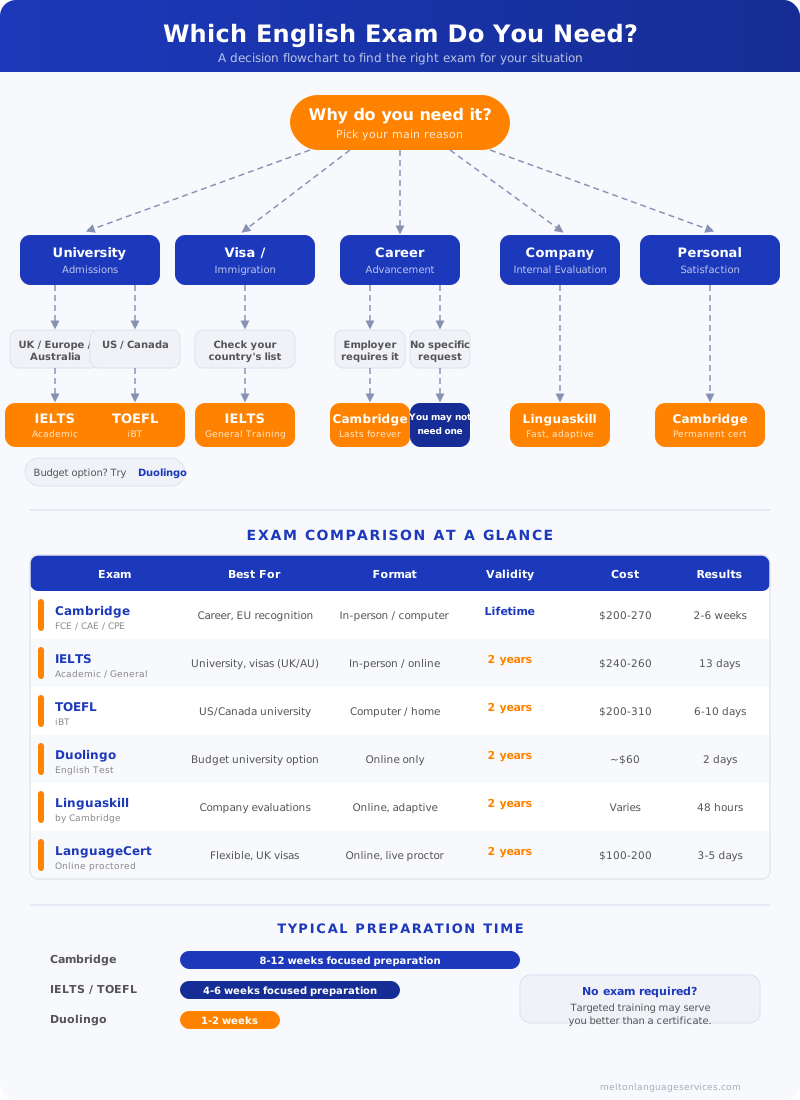
There are more English exams available now than at any point in history. Cambridge, IELTS, TOEFL, Duolingo English Test, Linguaskill, LanguageCert, OET, PTE… the list keeps growing. So how do you decide which one is right for you, and whether you need one at all?
Start with why
Before choosing an exam, ask yourself what you actually need the certificate for:
- University admission: Most universities publish a list of accepted exams and minimum scores. Check the specific requirements of your target institution.
- Professional registration: Some professions (medicine, law, engineering) require specific certifications in certain countries.
- Work visa or immigration: Countries like the UK, Canada, and Australia accept specific exams for visa applications.
- Career advancement: Some employers value certificates; many do not. A demonstrated ability to do the job in English often matters more than a piece of paper.
- Personal satisfaction: Nothing wrong with wanting proof of your level. Just be clear that this is your motivation.
If none of these apply, you might not need an exam at all.
The main exams compared
Cambridge English exams (B2 First, C1 Advanced, C2 Proficiency)
Best for: People who want a lifetime certificate. Cambridge certificates do not expire.
Cambridge exams test all four skills (reading, writing, listening, speaking) and provide detailed scores. They are widely recognised across Europe and have strong brand recognition with employers.
The downside: they require significant preparation time, and the exam format is quite specific. You need to learn the exam, not just English.
IELTS (International English Language Testing System)
Best for: University admissions and immigration, particularly for the UK, Australia, and Canada.
IELTS comes in two versions: Academic (for university) and General Training (for work and immigration). Results are valid for two years, which can be frustrating if your plans change.
TOEFL (Test of English as a Foreign Language)
Best for: US and Canadian university admissions.
TOEFL iBT is computer-based and tests academic English. If you are applying to North American universities, most will accept TOEFL. Some now accept the home edition, which you can take remotely.
Duolingo English Test
Best for: A quick, affordable option accepted by a growing number of universities.
The Duolingo English Test costs around $60, takes about an hour, and you can take it at home. It has gained significant acceptance since 2020, and over 5,000 institutions now accept it. However, it is still not as widely recognised as IELTS or TOEFL for immigration purposes.
Linguaskill (by Cambridge)
Best for: Companies evaluating employee levels quickly.
Linguaskill is an online test that provides results within 48 hours. It is adaptive, meaning the difficulty adjusts based on your answers. Many companies use it for internal benchmarking rather than as a formal qualification.
LanguageCert
Best for: People who need a flexible, online exam with fast results.
LanguageCert exams can be taken online with a live proctor. Results come quickly, and the certificates are accepted by UK Visas and Immigration. They are less well-known but increasingly popular.
Do you actually need a certificate?
For many professionals, the answer is no. If your employer has not asked for one, and you are not applying to university or for a visa, a certificate may not add value.
What employers typically want is evidence that you can function in English in a professional context. That evidence comes from:
- Successfully completing an interview in English
- Writing samples that demonstrate competence
- References from previous international roles
- Internal assessments or placement tests
A certificate confirms your level at a specific moment in time. Your actual ability to use English at work is demonstrated every day.
If you do decide to take an exam
Here are some practical tips:
- Give yourself enough preparation time. Most candidates need eight to twelve weeks of focused preparation for Cambridge exams, and four to six weeks for IELTS or TOEFL.
- Take a practice test first. Every major exam publishes sample papers. Do one under timed conditions before you start preparing to identify your weak areas.
- Focus on the exam format, not just your English. Each exam has its own question types, timing, and scoring criteria. Understanding the format is half the battle.
- Consider your strengths. If your speaking is stronger than your writing, some exams will suit you better than others. Look at how each skill is weighted.
- Check validity periods. Cambridge certificates last forever. IELTS and TOEFL expire after two years. Plan accordingly.
The bottom line
Choose an exam based on what you need it for, not on what seems most prestigious. If you need it for a specific purpose, check which exams are accepted. If you are doing it for professional development, consider whether targeted language training might serve you better than exam preparation.
The right exam is the one that gets you where you need to go.